





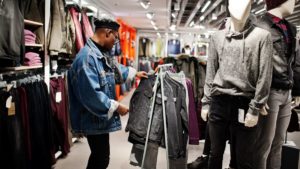
Fashion is a major sustainability challenge in the global economy, and for most of the last decade, it has faced little regulation. That is starting to change. In the past eighteen months, California passed the first U.S. law for extended producer responsibility (EPR) for textiles, France approved strict anti-fast-fashion laws, and the EU set a 2027 deadline for all member states to have a textile EPR program.
Every second, a garbage truck’s worth of clothing ends up in a landfill or is burned somewhere in the world. This isn’t just a figure of speech. The fashion industry produces about 92 million metric tons of waste each year, and if nothing changes, that number could reach 148 million metric tons by 2030.
Meanwhile, the resale market is growing about three times faster than traditional retail. The industry still has a long way to go, but for the first time, there are real systems in place to hold it accountable.
The Scale of the Problem
How big is fashion’s impact? It’s large, debated, and still growing. The fashion industry is responsible for 8 to 10 percent of global greenhouse gas emissions, according to the UN Environment Programme. While experts debate the exact numbers, everyone agrees the problem is getting worse.
The Apparel Impact Institute, a nonprofit supported by brands like H&M, Target, PVH, and Lululemon, reported that apparel sector emissions rose by 7.5 percent in 2023. This was the first yearly increase since 2019, and the group linked it to overproduction, ultra-fast fashion, and more use of virgin polyester, which now accounts for 57 percent of global fiber production.
No matter which numbers you believe, the trend is troubling. Each year, 80 to 100 billion new garments are made. Clothing production has doubled since 2000, and people now wear each item 36 percent fewer times before throwing it away. Synthetic fibers, mostly polyester made from fossil fuels, make up about 57 percent of global fiber production and are expected to increase.
The amount of water used in fashion is huge, even by industrial standards. Making one cotton T-shirt takes about 2,700 liters of water, which could provide drinking water for one person for 900 days. Producing a pair of jeans uses about 7,500 liters. Textile dyeing and treatment is the world’s second-largest source of water pollution, causing about 20 percent of industrial water pollution. ic clothing also sheds microplastics every time it’s washed. The IUCN has estimated that about 35 percent of primary microplastics in the ocean originate from synthetic textiles like polyester, nylon, and acrylic, though the total volume keeps rising as synthetic usage increases.
After technology manufacturing, garment production is still one of the industries most affected by modern slavery and child labor, according to International Labour Organization data. These problems are most common in the early stages of production, such as cotton farms, dye houses, and fabric mills, which are less visible than the brand-name factories.
Fast Fashion, Faster: The Shein and Temu Problem
In the last five years, a new category called ultra-fast fashion has emerged, making older models like Zara and H&M seem slow by comparison. Platforms such as Shein and Temu add thousands of new styles daily, produce items on demand in Chinese factories, and ship directly to customers around the world.
The environmental impact is severe. Shein’s own reports show its greenhouse gas emissions nearly doubled from 2022 to 2023, reaching 16.7 million metric tons of CO₂ equivalent. That’s almost as much as Inditex, Zara’s parent company, which is five times bigger by revenue. In 2024, Shein’s transportation emissions alone were over 8.5 million metric tons, more than three times Inditex’s. Temu hasn’t shared its emissions data, but third-party estimates put its yearly footprint between 4 and 6 million metric tons of CO₂e, mostly from shipping over a million air-freight parcels each day.
These business models not only pass environmental costs onto others, they rely on it. This is the main reason behind the push for new regulations.
The New Regulatory Landscape
For most of modern fashion history, sustainability promises have been voluntary, hard to verify, and mostly ineffective. That is finally starting to change. Three recent developments in the past eighteen months are especially important to watch..
California’s Responsible Textile Recovery Act (SB 707)
Governor Gavin Newsom signed SB 707 into law in September 2024, making California the first U.S. state with extended producer responsibility for textiles. The law shifts responsibility for end-of-use management of apparel, footwear, and household textiles from consumers and municipalities to the companies that put the products on the market. Producers with less than $1 million in annual global revenue are exempt; everyone else must join a state-approved Producer Responsibility Organization (PRO) that will finance collection, repair, reuse, sorting, and recycling.
Implementation is staged. On February 27, 2026, CalRecycle selected Landbell USA as California’s textile PRO. Producers must register with the PRO by July 1, 2026. A statewide needs assessment runs through 2027, final implementing regulations are due by July 2028, and full enforcement begins July 1, 2030, with fines of up to $50,000 per day for noncompliance.
France’s Anti–Fast Fashion Law
In June 2025, the French Senate passed the most aggressive anti-fast-fashion legislation in the world by a vote of 337 to 1. The law imposes a per-item eco-tax starting at €5 and rising to €10 by 2030 (capped at 50 percent of retail price), bans advertising and influencer marketing of ultra-fast-fashion brands, requires point-of-sale environmental disclosures including carbon footprint and durability data, and carries fines of up to €100,000 for violating the ad ban. Revenue is directed to French sustainable-fashion producers.
The law is clearly aimed at Shein and Temu. In November 2025, French authorities requested that Shein’s fast-fashion platform be suspended for three months over the sale of illicit products — days after Shein opened its first physical retail store in Paris. The European Commission issued a detailed opinion on the French law in September 2025; other EU member states are watching.
The EU Waste Framework Directive
Under revisions to the EU Waste Framework Directive, every member state was required to have separate textile waste collection in place by January 2025 and must have a fully operational textile EPR scheme by 2027. France’s EPR program, which has been operating since 2008, and the Netherlands (2023) are already live. Italy, Spain, and others have draft decrees in public consultation. Outside the EU, Switzerland, Australia, and Chile are developing national frameworks.
In the U.S., beyond California, New York’s Fashion Sustainability and Social Accountability Act (A4631) and Senate Bill S3217A both carried into the 2026 session. Washington State introduced HB 1420 in January 2025; as of March 2026, it remains in committee. None of these have passed.
The Resale Market Is Doing What Regulation Hasn’t
While policymakers work on new rules, consumers are already changing their habits. ThredUp’s 2025 Resale Report says the U.S. secondhand clothing market grew by 14 percent in 2024, five times faster than traditional retail. It’s expected to reach $74 billion by 2029. Globally, the secondhand market could hit $367 billion by 2029, growing 2.7 times faster than the overall apparel market.
There is a clear generational divide. In 2024, 58 percent of U.S. consumers bought secondhand clothing. Among those aged 18 to 44, 48 percent now choose secondhand first when shopping for clothes. Thirty-nine percent of younger shoppers have bought secondhand items through social platforms like Instagram or TikTok Shop.
Resale alone won’t solve fashion’s environmental impact. Extending a garment’s life only helps if it replaces a new purchase. Still, this is the biggest shift in consumer behavior the industry has seen in a generation.
What Sustainable Fashion Actually Means
Sustainable fashion means having a supply chain that is responsible for both the environment and people at every stage. In practice, this includes using fibers that need less water, fewer chemicals, and create lower emissions; manufacturing with renewable energy; ensuring fair wages and safe working conditions; making products that last and can be repaired; and recycling materials into new clothes instead of turning them into insulation or sending them to landfills in places like Ghana or Chile.
It’s a long list, and no brand meets every standard. Still, more brands are making real progress. Patagonia, Eileen Fisher, and Pangaia share detailed impact reports that are checked by outside experts. Brands using leftover fabrics, made-to-order production, and closed-loop recycling are slowly growing. Certifications like Global Organic Textile Standard (GOTS) for organic fibers, Fair Trade Certified for labor, and bluesign for chemical management are meaningful when you see them on a label.
Fashion is still the most greenwashed part of the consumer goods industry. Words like “conscious,” “eco,” and “sustainable” aren’t regulated in the U.S. What really matters are specific certifications, published supply-chain data, and third-party audits—not marketing slogans.
Take Action At Home
Individual choices won’t fix fashion’s big problems, but they do influence demand. That demand can drive companies and lawmakers to make changes. Here are some practical steps, ranked by impact:
- Buy less, buy better. The single most impactful choice is reducing the amount of new clothing entering your closet. A capsule wardrobe of durable, versatile pieces worn many times beats any “sustainable” label on a fast-fashion cycle.
- Shop secondhand first. ThredUp, Poshmark, Depop, The RealReal, Vinted, and local thrift and consignment stores now offer selection and convenience comparable to traditional retail.
- Get familiar with clothing materials. Natural fibers like organic cotton, linen, hemp, and wool usually have a smaller environmental impact at the end of their life than synthetics. Recycled polyester is better than new polyester, but it still releases microfibers.
- Use a microfiber filter. Tools like the Guppyfriend wash bag or washing machine filters can catch a lot of synthetic microfibers before they enter the water system.
- Repair before replacing. Visible mending, basic tailoring, and simple patches can extend a garment’s life by years.
- Take care of your clothes so they last longer. Wash them in cold water, air-dry when you can, and avoid the dry cleaner unless it’s necessary. These steps help reduce emissions and wear on your clothes.
- Recycle clothes instead of throwing them away. When something can’t be worn anymore, look for textile recycling options using Earth911’s recycling locator or a store take-back program. Sending clothes to a landfill should be the last resort.
- Support new policies. Laws about textile EPR, supply-chain transparency, and anti-greenwashing are being considered in many states. These laws are more likely to pass when people contact their representatives.
Fashion is one of the most obvious ways the global economy affects our daily lives. Because it’s so visible, everyone is part of the problem—but it also means that when change happens, it’s easy to notice.
Editor’ Note: Originally written by Gemma Alexander on April 8, 2022, this article was substantially updated in April 2026.
The post A Stylish Investment: Making Fashion Sustainable appeared first on Earth911.