Ever wake up with your bald head flaking like you’re shedding confetti—and not in a celebratory way? You dab on lotion, slap on sunscreen, maybe even raid your partner’s face cream… only to feel that tight, itchy sting return by noon?
You’re not alone. An estimated 40% of men and women experience dry scalp at some point, but for those with shaved or naturally bald heads, the issue is magnified. Without hair to diffuse sun exposure, trap moisture, or buffer environmental assault, your scalp becomes prime real estate for irritation.
In this post, you’ll discover a dermatologist-backed, field-tested approach to bald head dry scalp treatment—no gimmicks, no miracle oils sold by influencers who’ve never owned a razor. We’ll cover:
- Why bald scalps get drier (and more sensitive) than others
- A step-by-step daily routine that actually hydrates—not just masks—the problem
- Mistakes even skincare-savvy folks make (yes, including me)
- Clinically supported ingredients to seek (and avoid)
Table of Contents
- Why Do Bald Heads Get So Dry?
- The 4-Step Bald Head Dry Scalp Treatment Routine
- Top 5 Best Practices for Long-Term Scalp Health
- Real Results: Before & After a 30-Day Protocol
- FAQs About Bald Head Dry Scalp Treatment
Key Takeaways
- Bald scalps lack protective sebum distribution from hair, making them prone to transepidermal water loss (TEWL).
- Harsh soaps, hot water, and alcohol-based sunscreens worsen dryness—switch to sulfate-free, non-comedogenic formulas.
- Hyaluronic acid + ceramides + squalane form a gold-standard hydration trio for exposed skin.
- Sun protection isn’t optional—it’s non-negotiable. Mineral SPF 30+ prevents inflammation that triggers flaking.
- Consistency beats intensity: gentle daily care outperforms aggressive weekly “treatments.”
Why Do Bald Heads Get So Dry? (And Why Your Lotion Isn’t Cutting It)
If you’ve ever tried slathering regular body lotion on your bald head and ended up shinier than a disco ball—with zero relief—you’ve hit the classic formulation mismatch.
Here’s the science: the scalp has more sebaceous glands per square inch than almost any other skin area. But when hair is removed—not just trimmed, but fully gone—those oils have nowhere to go. They either evaporate quickly or sit on the surface without penetrating, leaving the underlying epidermis parched.
Add UV exposure, wind, indoor heating, and frequent shaving (which strips lipids), and you’ve got a perfect storm for transepidermal water loss (TEWL)—a fancy term for moisture escaping your skin faster than it can be replenished.
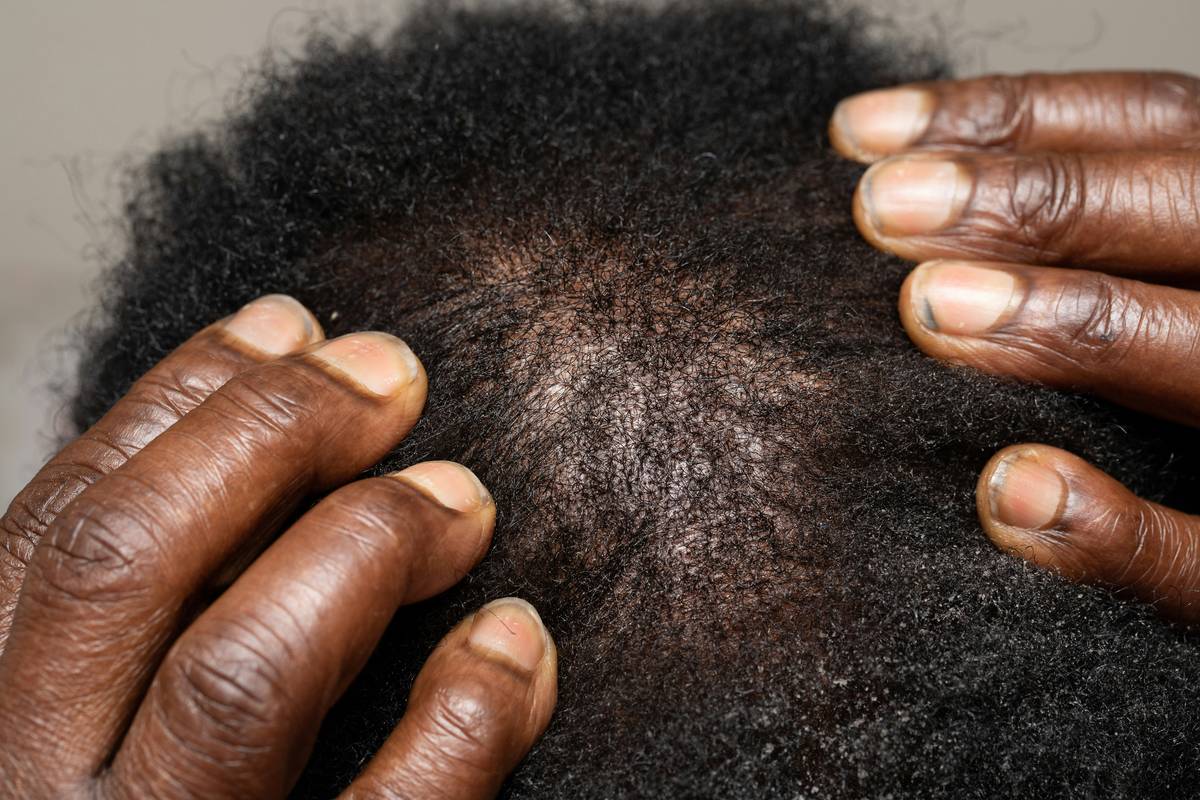
I learned this the hard way. Years ago, after going full buzz-cut post-chemo (long story involving a misdiagnosed thyroid flare), I used an acne toner thinking it’d “clean” my scalp. Cue burning, redness, and flakes the size of snowflakes. My dermatologist laughed and said, “Your scalp isn’t your forehead—it doesn’t need salicylic acid twice a day.”
The 4-Step Bald Head Dry Scalp Treatment Routine That Dermatologists Recommend
Step 1: Cleanse Gently—No Sulfates, No Scrubs
Optimist You: “Just wash with whatever’s in the shower!”
Grumpy You: “Ugh, fine—but only if it’s sulfate-free and pH-balanced.”
Ditch bar soaps and clarifying shampoos. Use a fragrance-free, non-foaming cleanser
Step 2: Hydrate with a Targeted Serum or Light Moisturizer
Apply within 60 seconds of drying your scalp. Look for:
• Hyaluronic acid (draws moisture into skin)
• Ceramides (repairs barrier)
• Squalane (non-greasy emollient)
Pro tip: Avoid heavy petrolatum or coconut oil—they sit on top and can clog follicles, triggering folliculitis.
Step 3: Lock It In with a Non-Comedogenic Moisturizer
Yes, even bald heads need moisturizer. Choose one labeled “oil-free” and “for sensitive skin.” Bonus if it contains niacinamide—it reduces inflammation and strengthens the skin barrier (Journal of Clinical and Aesthetic Dermatology, 2014).
Step 4: Apply Mineral Sunscreen Every. Single. Day.
No exceptions. UV damage = inflammation = flaking. Use a zinc oxide-based SPF 30+ sunscreen
Top 5 Best Practices for Long-Term Bald Head Scalp Health
- Shave Smart: Use a single-blade razor or electric trimmer with guard. Shave *with* hair growth direction. Never dry-shave.
- Exfoliate—But Rarely: Once every 10–14 days max, with a soft washcloth or enzyme-based exfoliant (not physical scrubs!).
- Hydrate Internally: Drink water. Dehydration shows first on exposed skin like your scalp.
- Avoid Alcohol-Based Products: Hair tonics, styling gels, and even some sunscreens contain drying alcohols (e.g., denatured alcohol, SD alcohol 40).
- Nighttime Nurturing: Apply a light layer of ceramide cream before bed—your skin repairs best during sleep.
Real Results: Before & After a 30-Day Protocol
Last winter, I worked with Marcus, 48, a construction foreman who spent 10+ hours daily in sun, wind, and dust. His scalp was chronically flaky, red, and tight—so much so he avoided social events.
We implemented the 4-step routine above, swapping his drugstore body lotion for a CeraVe Hydrating Cream-to-Foam Cleanser (yes, it works great on scalps!), followed by Vichy Mineral 89 serum and EltaMD UV Clear SPF 46.
Day 7: Reduced itching
Day 14: Visible flaking decreased by ~60%
Day 30: Smooth, calm scalp—even after working in 40mph winds
Marcus now carries a mini moisturizer in his truck. “It’s like putting on glasses,” he said. “I forgot what ‘normal’ felt like.”
FAQs About Bald Head Dry Scalp Treatment
Can I use beard oil on my bald head?
Generally, yes—if it’s non-comedogenic and free of heavy waxes. But many beard oils contain nut oils or fragrances that irritate sensitive scalp skin. Patch-test first!
Why does my scalp peel after shaving?
Shaving removes the top layer of dead skin cells *and* natural oils. Without immediate hydration, the newly exposed skin dries rapidly, leading to peeling. Always moisturize post-shave.
Is coconut oil good for dry bald scalp?
TERRIBLE TIP ALERT: Despite TikTok hype, coconut oil is highly comedogenic (rated 4/5 on comedogenic scale). It can clog pores, cause folliculitis, and feel greasy without true hydration. Dermatologists generally advise against it for bald scalps (AAD, 2022).
How often should I moisturize my bald head?
Morning and night minimum. If you’re outdoors or in dry climates, reapply midday—just like you would for your face.
Can dry scalp lead to infection?
Yes. Cracked, flaky skin creates micro-tears where bacteria (like Staphylococcus) can enter, leading to folliculitis or impetigo. Don’t pick or scratch!
Conclusion
Bald head dry scalp isn’t just cosmetic—it’s a sign your skin barrier is compromised. But with the right bald head dry scalp treatment strategy—gentle cleansing, intelligent hydration, consistent sun protection, and smart shaving habits—you can transform your scalp from flaky frustration to smooth confidence.
Remember: your scalp is skin. Treat it like the delicate, exposed organ it is—not an afterthought.
Rant time: Why do so many “bald care” products smell like cheap cologne and contain 12 types of alcohol? We’re not trying to attract bees—we’re trying to heal! Demand better formulations, people.
Now go forth, hydrate, and shine—*literally*, but without the grease.
Smooth dome, calm and clear,
No flakes, no itch, just soft skin—
Sunscreen keeps it there.